
Across Asia, the digital landscape has become a dynamic terrain for the articulation and contestation of political sovereignty, particularly in regions grappling with separatist tensions. This contestation involves what scholars term digital sovereignty, which extends beyond state-centered control of cyberspace to encompass functional dimensions (platform governance and infrastructure control), geopolitical dimensions (state and regional strategies for technological autonomy and normative leadership), and constructivist dimensions (sovereignty as a discursive resource mobilized by diverse actors to legitimize political claims). From the resistance movements in Kashmir and Hong Kong to the Rohingya issue in Myanmar and the southern insurgency in Thailand, digital platforms serve as critical arenas where narratives of identity, injustice, and autonomy are constructed, disseminated, and challenged. In Kashmir, for instance, the abrogation of Article 370 by the Indian government ignited a storm of online activism and global solidarity messaging, while in Hong Kong, anti-extradition protests were significantly amplified through encrypted channels and viral social media campaigns. Similarly, digital media has allowed Rohingya activists to globalize their statelessness and persecution, framing their struggle in human rights terms.
Within this broader regional milieu, Indonesia’s West Papua presents a particularly compelling case. While much research has addressed the political tensions in West Papua through legal, historical, or conflict studies lenses, relatively little attention has been paid to the role of digital political discourse in shaping public perception, mobilizing identity, and influencing state citizen dynamics during electoral periods. This constitutes a significant gap, especially considering the increasing centrality of social media in political communication across Southeast Asia. Most prior studies have focused on physical violence or development policy, sidelining the discursive battles occurring on platforms such as Twitter, where political meanings are created, contested, and transformed in real time. Moreover, digital discourse in separatist regions is often analyzed in isolation, without embedding it within comparative frameworks or theoretical models that illuminate patterns across cases.
In particular, there is limited theorization of how digital sovereignty operates in electoral contexts, which are moments when legitimacy is most vulnerable to discursive contestation. This study addresses this gap by positioning West Papua within a comparative postcolonial Asian framework, drawing analytical parallels with Kashmir, Hong Kong, and other contested sovereignties. This article intervenes in an ongoing scholarly debate on how digital sovereignty is negotiated and contested in the age of platform-mediated politics, particularly in the context of online separatist movements where state power, transnational advocacy networks, and algorithmic governance intersect. The central intellectual puzzle driving this study is why, despite the Indonesian state’s significant control over offline politics and security in West Papua, pro–independence narratives continue to gain global visibility and resonance in digital spaces during elections.
Existing literature on digital sovereignty (Pohle & Thiel, 2021), online separatist movements and networked protests (Tufekci, 2017), and narrative politics (Altheide & Merkovity, 2022) has rarely been applied to electoral contexts in southeast Asia, let alone to West Papua. While these studies have offered insights into platform governance, networked protests, and the power of political storytelling, they have not systematically examined how these dynamics interact during elections—moments of heightened struggle over legitimacy and identity. This study addresses this neglect by applying these theoretical lenses to a comparative, multi-method analysis of West Papua’s digital discourse in 2019 and 2024. This study therefore asks how digital sovereignty is contested through social media narratives in West Papua during Indonesia’s 2019 and 2024 elections, and what this reveals about the interplay between electoral politics and online separatist movements in postcolonial Asia. While studies on West Papua’s digital discourse have emerged, they often lack a systematic linkage between theoretical concepts and empirical data, particularly in electoral contexts where digital narratives intersect with political legitimacy struggles.
Few have combined social network analysis (SNA), or more specifically, social media network analysis (SMNA) with critical discourse analysis (CDA) to reveal how narrative power is structured both relationally (through network connectivity) and semiotically (through linguistic and discursive choices). SMNA in this article refers to SNA applied specifically to social media network structures. This study addresses that gap by integrating SMNA and CDA with in-depth interviews, allowing for a multi-layered understanding of how digital sovereignty was contested in real time during Indonesia’s 2019 and 2024 general elections.
In recent years, digital platforms have emerged as key battlegrounds for contesting state legitimacy and asserting political identities, particularly in regions marked by historical grievances and contested sovereignties. Across Asia, struggles over self–determination and autonomy increasingly unfold not only on the ground but also online, where narratives are constructed, amplified, and circulated in ways that transcend national borders. From Hong Kong to Kashmir and West Papua, digital media have allowed both state and non–state actors to reframe internal conflicts as global causes, mobilize transnational networks, and shape public perceptions at domestic and international levels.
This article examines how digital political discourse surrounding West Papua operates as a site of contested digital sovereignty, where state authority, platform governance, and competing definitions of sovereignty intersect during Indonesia’s 2019 and 2024 general elections. While West Papua has long been a site of conflict and marginalization, its prominence in digital discourse has surged in recent electoral cycles. Pro–independence actors employ transnational messaging strategies, often using English and human rights framing, to appeal to global audiences. In contrast, Indonesian state actors and pro–NKRI (Unitary State of Indonesia) supporters construct a counter–narrative of national unity, development, and constitutional legitimacy, largely aimed at domestic audiences.
By analyzing the content, actors, and strategies of these digital narratives, this study situates the West Papuan discourse within a broader regional and theoretical conversation about digital sovereignty, connective action, and narrative conflict in Asia. In doing so, it contributes to interdisciplinary discussions in Asian Studies, political communication, and media studies, offering insights into how digital arenas mediate struggles over territory, identity, and legitimacy.
Literature Review and Theoretical Framework
In light of the centrality of theoretical foundations and previous empirical research, the following subsections outline the key concepts and scholarly debates that inform the present study.
Digital Sovereignty
Digital sovereignty is generally understood as the capacity of political actors to regulate digital infrastructures, control data flows, and determine the conditions of visibility and access to information in online space. Recent literature highlights three complementary dimensions. First, the functional dimension emphasizes the governing role of technology platforms in shaping digital spaces through content moderation policies, algorithmic curation, and infrastructural design. Second, the geopolitical dimension conceptualizes digital sovereignty as a strategy employed by states or regional blocs to secure technological autonomy and project normative influence within the global digital order. Third, the constructivist dimension treats sovereignty as a discursive resource that is continually contested by both state and non-state actors in order to legitimize their political claims.
The core scholarly debate oscillates between state-centered perspectives that prioritize state control over digital infrastructures and multi-actor approaches that emphasize the relative autonomy of platforms and the ability of social movements to disrupt established power arrangements through networked narratives. This study positions itself between these perspectives by emphasizing that the contestation of digital sovereignty emerges through the interaction between state authority, platform governance, and civil society actors who strategically exploit policy loopholes and algorithmic logics.
Within this context, this study incorporates the constructivist dimension into an electoral setting by demonstrating that elections generate intensified conditions for the struggle over the meaning of sovereignty in digital space. In the case of West Papua, this produces a contest between state narratives rooted in legality and development, and pro-independence narratives that draw on human rights and transnational solidarity. These competing narratives are shaped and mediated by platform governance and the architecture of digital networks.
Narratives of Separatism in Asia’s Digital Sphere
Across Asia, separatist movements have strategically leveraged the affordances of social media—most notably Twitter/X—as networked arenas for constructing discursive repertoires that challenge state legitimacy, amplify localized grievances, and cultivate transnational solidarity. Despite operating in distinct political and cultural environments, these movements exhibit convergent patterns in their framing practices, affective registers, and mobilization of diaspora networks to secure sustained visibility in the global public sphere.
In the case of Kashmir, digital activism intensified following the Indian government’s abrogation of Article 370 in August 2019 (Ali, 2023; Rajgarhia, 2020). Hashtags such as #StandWithKashmir, #KashmirBleeds, and #FreeKashmir circulated widely, driven by a connective infrastructure of diaspora activists and transnational human rights organizations. These narratives foregrounded themes of militarization, demographic engineering, and collective trauma, often articulated in English to optimize global reach—a strategy consistent with transnational connective action frameworks. State responses, including prolonged Internet shutdowns and heightened surveillance, reconfigured the discursive ecology by constraining in-situ voices while amplifying mediated representations from abroad.
In Hong Kong, the 2019 anti-extradition protests generated a decentralized ecosystem of digital resistance, enabled by platforms such as Telegram, Reddit, and LIHKG (Albrecht et al., 2021; Wang & Mayer, 2022). Here, connective action took visual and affective form through memes, livestreams, and rapid content circulation, producing a narrative of democratic resistance against authoritarian encroachment. This discursive repertoire benefited from relatively open information flows and global media amplification until the imposition of the National Security Law in 2020 curtailed both digital and physical forms of dissent.
In Myanmar, the Rohingya crisis revealed the ambivalence of digital activism. Rohingya advocates and NGOs used platforms such as Twitter and Facebook to document atrocities and mobilize international sympathy under hashtags like #SaveRohingya and #RohingyaGenocide (Nasir, 2020). These efforts, however, were met with coordinated state-linked disinformation and nationalist counter-narratives (Howard & Hussain, 2013; Tufekci, 2017; Zuboff, 2019). Yet diaspora-led amplification helped sustain global awareness, underscoring the resilience of transnational advocacy networks in hostile information environments (Nasir, 2020).
These comparative cases, which include Hong Kong, Kashmir, and Myanmar, illustrate how digital contestation unfolds across different regime types, ranging from hybrid systems to authoritarian contexts, and they offer an analytical foundation for understanding the dynamics observed in West Papua. They also reveal the interplay between affective publics, platform governance, and state countermeasures, offering a conceptual bridge to the subsequent analysis of narrative contestation in the Papuan digital sphere.
Connective Action
Connective action, as theorized by Bennett and Segerberg (2012), represents a shift in political mobilization from collective, organizationally driven action to more personalized, digitally mediated forms of engagement. Rather than relying on formal structures and ideological alignment, connective action is characterized by the use of digital platforms to enable loosely coordinated, individualized contributions that still contribute to a shared political goal. This is especially relevant in the context of West Papuan activism, where many actors—including diasporic youth, student organizations and civil society groups—use Twitter, now known as X and other platforms to disseminate emotionally resonant content without necessarily operating under a central command. Connective logic enables horizontal networks of activism and amplifies the visibility of marginalized voices through personalized storytelling and viral imagery. Unlike collective action, which presupposes a unified leadership or clear agenda, connective action is more flexible, inclusive and emotionally driven.
The case of West Papua demonstrates how electoral connective action combines grassroots mobilization strategies with elite discourse to produce a polarized digital public sphere. Empirical studies further clarify that connective action operates through at least three modes: “crowd-enabled networks” (CENs), which rely almost entirely on the viral spread of personalized content with little or no organizational leadership; “organizationally brokered networks” (OBNs), which follow the logic of traditional collective action; and “organizationally enabled networks” (OENs), which represent a hybrid model in which organizational actors facilitate and coordinate personalized forms of digital participation (Bennett & Segerberg, 2012). In the West Papuan case, digital activism tends to develop into hybrid organizationally-enabled networks. In our previous study, (Hutasoit et al., 2025) we used social network analysis to identify key West Papua diaspora accounts and civil society organizations that function as bridging nodes, strategically amplifying individual messages and coordinating participant engagement through hashtag-based campaigns. This confirms that connective action in this context operates through a combination of personalization and organizational enablement.
Critical Discourse Analysis: Discourse–Historical Approach
This study applies Ruth Wodak’s Discourse–Historical Approach (DHA) to analyze the narratives produced in digital discourse and situates language within its broader socio-political context. DHA emphasizes intertextuality, interdiscursivity, and the diachronic evolution of narratives (Wodak, 2015), and examines how power, ideology, and identity are encoded in language and mobilized to legitimize or challenge authority. In the case of West Papua, DHA is used to interpret both pro-independence and pro-state narratives based on their ideational, interpersonal, and textual metafunctions (Halliday, 1978). For example, recurrent terms such as genocide, referendum, or development are treated as ideational choices that align with particular political projects, while metaphorical framings and evaluative language reveal the interpersonal positioning of the speaker or author.
Consistent with the principles of DHA, linguistic patterns are interpreted in relation to the historical formation of Papua as a postcolonial conflict zone and the ongoing marginalization of indigenous populations. By linking discursive choices to these socio-historical factors, the analysis traces how legitimacy, victimhood, and sovereignty are discursively contested in digital space. In line with Wodak’s approach, language is thus examined not merely as representation, but as a key arena in which power and hegemony are continuously produced, negotiated, and challenged.
Network Structure and Discursive Meaning
While Social Media Network Analysis (SMNA) and Critical Discourse Analysis (CDA) have been applied in various digital politics research, these methods are rarely used together to examine electoral or separatist contexts. In the case of West Papua, the integration of these two approaches remains limited, even though the electoral context offers an important opportunity to examine how network structures mediate the dissemination of narratives and how linguistic choices shape political legitimacy. Research on digital political discourse therefore requires an analytical framework that bridges the structural dynamics of online networks with the discursive meanings embedded in political narratives.
SMNA provides tools to identify the relational patterns among actors, measure their relative influence, and map the communities that emerge within digital platforms. CDA, in turn, allows for a deeper understanding of the ideological and linguistic dimensions that underpin those narratives. The combination of these methods enables a more comprehensive analysis of digital separatism by demonstrating not only who interacts with whom, but also how legitimacy is discursively constructed through language and symbolism.
In this regard, separatism is understood not only as a political claim but also as a symbolic act, performed through language, imagery, and affiliation in the digital sphere. Hashtags, profile photos and viral videos function as semiotic resources that express a collective desire for autonomy or independence and allow diasporic communities to participate actively in shaping the narrative. Digital conflicts in regions such as Kashmir, Southern Thailand, and Aceh demonstrate how online platforms are used to sustain resistance narratives, mobilize transnational solidarity, and frame local struggles through universal values such as human rights and cultural preservation.
Theoretical Basis and Analytical Integration
To ensure analytical coherence, this study integrates insights from social media network analysis, connective action theory, critical discourse analysis, and separatism studies into a unified framework. Social media network analysis reveals the underlying network structures and key influencers; connective action explains the participatory logic of decentralized mobilization; the Discourse–Historical Approach (DHA) unpacks the linguistic construction of ideology; and separatism studies embed the analysis within broader historical and geopolitical struggles. Taken together, this synthesis not only maps the digital terrain of political communication but also interprets the symbolic and affective dimensions that underpin the contestation of sovereignty in postcolonial Asia.
In electoral settings, the contestation of narratives in digital space tends to combine persuasive communication strategies with networked forms of coordination. These dynamics can reinforce the legitimacy of those in power or, alternatively, promote counter-narratives that challenge existing structures of authority. Against this backdrop, West Papua constitutes a critical case for understanding how electoral political narratives intersect with digital sovereignty.
This study directly addresses this gap by integrating the findings of Social Media Network Analysis and Critical Discourse Analysis. It maps key actors and community structures on Twitter/X and links them to a semiotic and ideological examination of both pro-state and pro-independence narratives. In addition, in-depth interviews provide socio-political context and reveal the motivations behind specific narrative strategies, thereby allowing the analysis to capture how digital sovereignty is contested simultaneously at the structural and discursive levels.
Building on the theoretical foundations and the literature discussed above, this research adopts a mixed-methods approach that integrates SMNA, CDA, and in-depth interviews in order to obtain a multi-layered understanding of narrative contestation in digital space. The selection of these methods is driven by the need to map the structure of networks that mediate narrative dissemination (SMNA), identify the ideological and linguistic meanings conveyed in these narratives (CDA), and complement the findings with contextual insights from key actors (interviews). The integration of these three methods responds to the limitations of previous studies, which tend to separate structural and discursive analyses and overlook the subjective perspectives of actors on the ground. Overall, this integrated approach enables a more comprehensive examination of digital sovereignty, connective action, and narrative politics in the context of electoral separatism in postcolonial Asia.
Methodology
This study adopts a mixed-methods approach with a triangulated design to integrate quantitative and qualitative analyses within a single analytical framework. The rationale for this approach is to ensure that quantitative data reveal the relational structure of digital interactions, while qualitative data uncover the ideological and discursive meanings underpinning the narrative contestation.
Data Collection
Empirical data were collected from the social-media platform Twitter/X using the Drone Emprit Academic engine. Two electoral periods were covered: January 1 - February 28, 2019 (2019 general elections) and January 14 - February 14, 2024 (2024 elections). The crawling process employed a set of keywords and hashtags associated with Papua, political conflict, and elections, including variations in both Bahasa Indonesia and English (e.g. #PapuaMerdeka, #FreeWestPapua, #ReferendumNow). Duplicate entries in order to ensure analytical accuracy. During the 2019 election period, a total of 514,418 digital texts were retrieved, consisting of 31,140 mentions from online news sources (6%) and 483,278 from social-media platforms (94%). In the 2024 period, 333,253 mentions were collected, of which 26,190 originated from online media (8%) and 307,063 from social media (92%). Online media refers to digital news articles collected outside Twitter via keyword-based searches of Indonesian news portals. These were extracted using Drone Emprit, a tool that captures news content containing specific Papua-related keywords (e.g., “Papua Merdeka”, “OPM”, “West Papua”, “NKRI”). Social media refers exclusively to tweets, including those from news organizations. Tweets linking to news articles remain categorized as social media, while the articles themselves are categorized as online media. These figures underscore the increasing salience of social platforms as arenas of electoral narrative production (see Table 1).
In this study, Twitter/X served as the primary platform for all analytical components, including network mapping, discourse analysis, and narrative categorization. During the automated monitoring process, the system also detected mentions from Instagram and Facebook, and therefore their frequencies are reported for descriptive transparency. In the 2019 election period, the 483,278 social media mentions consisted of 399,821 tweets on Twitter (78%), 73,583 posts on Instagram (14%), and 9,874 posts on Facebook (2%). In the 2024 election period, the 307,063 social media mentions consisted of 306,110 tweets on Twitter (92%), 184 posts on Instagram (0.06%), and 769 posts on Facebook (0.25%). However, due to API limitations and incomplete data accessibility on Instagram and Facebook, only Twitter/X data were included in the analytical stages of the study, while the additional platform counts are retained solely to provide an accurate representation of the broader monitoring output.
In addition, in-depth interviews were conducted with 23 informants representing a full spectrum of political positions (pro-NKRI, pro-independence, and neutral), including government officials, indigenous leaders, activists, and political analysts. The interviews were carried out in a semi-structured format in order to explore their experiences, strategic considerations, and perceptions regarding the digital narrative contestation.
Analytical Procedures
The analysis was conducted through three complementary stages. First, SMNA was performed using Gephi in order to map the overall network structure and identify key actors involved in the narrative contestation. In-degree, out-degree, PageRank and modularity class metrics were used to measure structural connectivity, relative influence, and network polarization. Network visualizations were generated to distinguish between pro-NKRI and pro-independence clusters and to identify bridging nodes that facilitated narrative diffusion across cluster boundaries.
The second stage applied the DHA within the broader framework CDA to examine the construction of meaning and rhetorical strategies in digital narratives. The analysis focused on the ideational, interpersonal, and textual metafunctions (Halliday, 1978) to identify patterns of actor representation, argumentation strategies and lexical choices that underpin ideological positions. In order to address the limitations of previous studies that separate structure from meaning, the findings from SMNA were used as entry points for the CDA, thereby situating discursive patterns within their relational network context. This integrative approach enables a more comprehensive understanding of how narratives are produced, circulated, and modified in digital environments.
In the third stage, in-depth interviews with 23 key informants were analyzed to contextualize the SMNA and CDA findings and to explore the motivations behind narrative strategies. The interview data also served as a validity check, reducing the risk of misinterpretation arising from social-media data alone. Data and theoretical triangulation were employed, an inter-coder reliability check was conducted during the CDA phase, and an audit trail was maintained throughout the research process to ensure analytic rigor and reproducibility.
Analytical Framework
DHA operates through six procedural steps (Wodak & Meyer, 2016) that guide empirical investigation: (1) identifying discursive topics, (2) analyzing argumentation strategies, (3) examining linguistic realizations, (4) tracing intertextual and interdiscursive links, (5) contextualizing the discourse, and (6) interpreting the findings.
The application of DHA in this study is further informed by Wodak’s six dimensions of political discourse (Wodak, 2015), which serve as analytical lenses for understanding the communicative environment in which the narratives operate: (1) Political performance or staging (front stage), (2) Everyday political life and backstage interactions (back stage), (3) The impact of political personalities (charisma, credibility) on performance, (4) Mass-mediated production of politics (media, advisers, spin doctors), (5) Recontextualization of politics in media, (6) Political participation (power, ideology, gatekeeping, legitimacy, and representation). These dimensions ensure that the discourse is examined not only as textual data but as a political performance embedded in multi-level communicative practices.
To enhance analytical robustness, SMNA is used to identify influential actors, network structures, and clusters of interaction within the digital arena, providing relational data that is then interpreted through the DHA-SFL framework. The triangulation of network structure (SMNA), textual-semiotic analysis (SFL), and DHA enables a comprehensive understanding of how narratives are produced, circulated, and contested in the digital sphere.
Building on the theoretical foundations outlined in the literature review, the methodological approach adopted here operationalizes the concepts of digital sovereignty, online separatist movements, and narrative politics—including the logic of connective action—into a coherent analytical procedure. The integration of SMNA with the DHA, enriched by systemic functional linguistics (SFL), allows this study to move seamlessly from macro-level mapping of digital actor networks to micro-level analysis of discursive strategies and linguistic realizations. This combined framework not only addresses the identified gaps in existing scholarship but also provides the empirical and analytical tools necessary to reveal how competing narratives around West Papua are structured, mobilized, and contested during Indonesia’s 2019 and 2024 general elections. The subsequent findings and analysis sections follow this logic: starting with network-level patterns, moving to discursive strategies, and culminating in a contextualized interpretation of how digital political discourse both reflects and shapes the struggle over sovereignty in West Papua.
Findings
Digital Separatism and Narrative Contestation in West Papua
Within the broader Asian context, West Papua presents a distinctive case of how separatist and pro-state narratives contend in the digital sphere, particularly during electoral moments. The findings indicate that pro-independence activists—many of whom are part of the Papuan diaspora—frequently used affect-laden hashtags, such as #FreeWestPapua, #bennywenda, and #WestPapua in their posts. These hashtags appeared recurrently in the dataset and were commonly associated with messages highlighting state violence, historical grievances, and calls for self-determination. A substantial portion of these posts were written in English, reflecting an effort to communicate with broader audiences and connect their claims to global human-rights discourses. The focus here is on the thematic patterns that emerged in the dataset rather than on the quantitative prevalence of specific hashtags.
In contrast, pro-NKRI (Unitary State of Indonesia) actors—including government officials, national influencers, and patriotic accounts—tended to use hashtags such as #PapuaNKRI, #YukPemiluDamai, and #IndonesiaDamai. These hashtags appeared consistently across the dataset and were associated with messages promoting development, national unity, and constitutional legitimacy. Posts from this cluster primarily targeted domestic audiences and predominantly used Bahasa Indonesia. The distinction between pro-NKRI and pro-independence content was derived from thematic coding and co-occurrence patterns in the dataset rather than from quantitative proportions of hashtag usage.
Qualitative analysis underscores significant differences in the stylistic and strategic choices of both camps. Pro-independence actors relied heavily on emotionally charged language, evocative imagery, and references to international human rights frameworks. By comparison, pro-NKRI actors emphasized development statistics, narratives of harmony, and symbols of nationalism. However, within the algorithmic logic of social media, pro-independence narratives enjoyed greater visibility and resonance due to their emotional appeal and their ability to connect the Papuan cause with global issues such as Palestine or Ukraine.
This narrative contestation unfolds not only in immediate responses to unfolding events but also through deliberate digital agenda-setting aimed at shaping public perceptions of West Papua. Differences in language choice, target audiences, and framing strategies produce an asymmetrical contest, wherein pro-independence actors demonstrate greater capacity for transboundary narrative networking, while pro-NKRI actors remain predominantly defensive and reactive.
Social Media Network Analysis of “Papua Merdeka” Discourse
To capture the structural dynamics of online engagement surrounding the Papua Merdeka discourse, this study conducted a SMNA of Twitter/X datasets collected via the Drone Emprit platform during the 2019 and 2024 Indonesian general elections. The analysis focused on identifying central actors, interaction patterns, and the degree of fragmentation or cohesion within the digital network.
Key influencers across both election cycles included @VeronicaKoman, @FreeWestPapua, @Mythicalforest, @PapuaItuIndonesia, and @JayapuraUpdate. While these accounts differed in political orientation, they occupied structurally significant positions in their respective narrative clusters, shaping the flow and visibility of information.
The network structure was examined using Gephi, with core metrics—including number of nodes, edges, average degree, network diameter, modularity, and clustering coefficient—used to quantify interaction patterns.
The analysis reveals that although the number of nodes remained constant at 4,000 across both election cycles, the number of edges increased markedly from 4,892 in 2019 to 7,163 in 2024. This suggests a significant intensification in the volume of interactions within the network. Average degree and average weighted degree also rose, indicating denser interconnections and heightened interaction intensity in 2024.
The network diameter decreased from 8 to 4, implying that information could traverse the network in fewer steps, thereby accelerating the diffusion process. Similarly, the number of connected components declined from 916 to 655, reflecting a more consolidated and interconnected community structure.
A notable decline in modularity—from 0.80 in 2019 to 0.52 in 2024—signals reduced segmentation between user communities, pointing to greater cross-cluster interaction. While this suggests a more integrated discourse environment, the persistence of identifiable group boundaries indicates that ideological divides remain. The lower average clustering coefficient in 2024 suggests weaker localized bonding but stronger global diffusion patterns, enabling narratives to spread more widely across the network.
Taken together, these metrics indicate a shift from a more segmented, elite-driven network in 2019 to a denser, more horizontally connected network in 2024. This structural transformation underscores the evolving nature of political discourse in West Papua’s digital sphere, wherein pro-independence actors continue to dominate the central hubs of interaction, while pro-NKRI actors maintain a more peripheral and reactive presence.
Visualizing Digital Narrative Networks
The network visualizations generated through Gephi provide a spatial representation of how actors and narratives in the Papua Merdeka discourse were organized and connected during the 2019 and 2024 election cycles. These visual maps offer a complementary layer of analysis, enabling the identification of narrative clusters, central influencers, and the degree of overlap—or lack thereof—between opposing discourse communities.
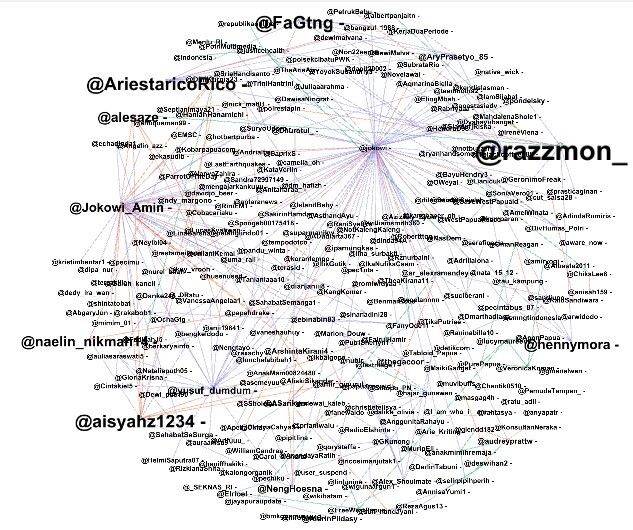
In 2019, the pro-Papua Merdeka network appeared as a dense and compact cluster dominated by diasporic accounts, many of which engaged in sustained cross-linking with international human rights organizations and activist networks. The pro-NKRI cluster was more dispersed and peripheral, with relatively fewer internal linkages and limited cross-cluster engagement. The visual topology suggested a high degree of polarization, with minimal narrative interaction between the two opposing camps. (See Figure 1).
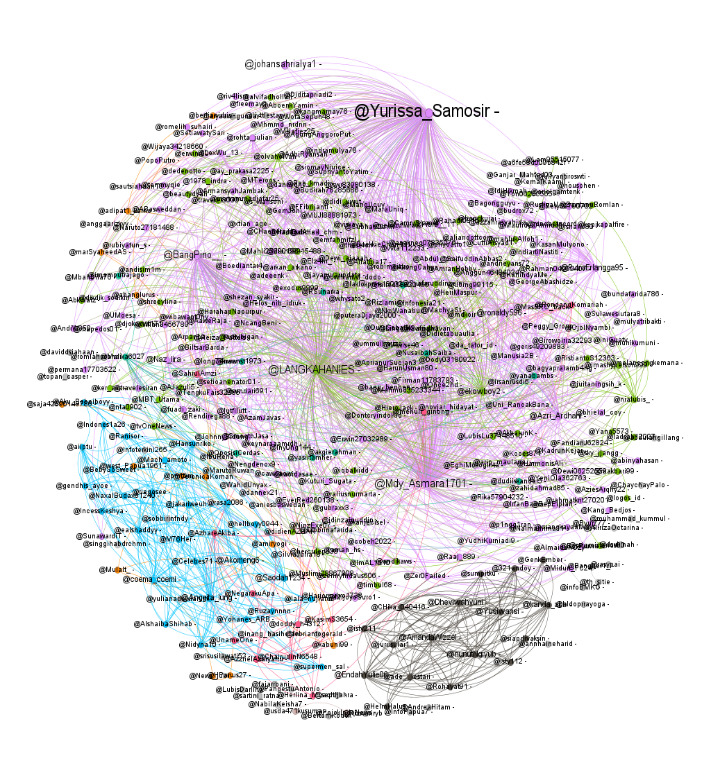
In 2024, the network expanded in both scale and complexity. While the pro-independence cluster maintained a dominant central position, it exhibited lower modularity compared to 2019, reflecting increased interconnections across previously distinct groups. A notable development was the emergence of hybrid actors—accounts that engaged with both pro-independence and pro-NKRI narratives—serving as weak ties between ideologically opposed communities. Despite this, the ideological core of each camp remained intact, preserving distinct narrative boundaries.
The 2024 maps (Figure 2) also reveal stronger international linkages, particularly through the circulation of English-language hashtags and retweets of global solidarity content, such as comparisons to Palestine and Ukraine. In contrast, pro-NKRI messaging remained primarily in Bahasa Indonesia, limiting its reach to domestic audiences. Official Indonesian government accounts were present but remained largely peripheral, indicating a continued underutilization of digital diplomacy in counter-narrative efforts.
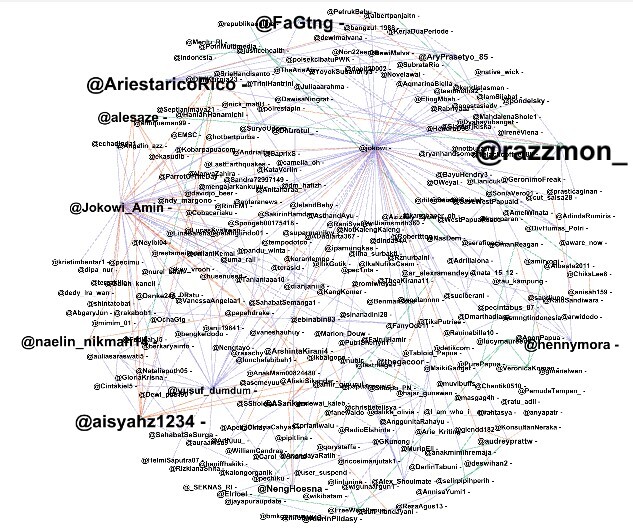
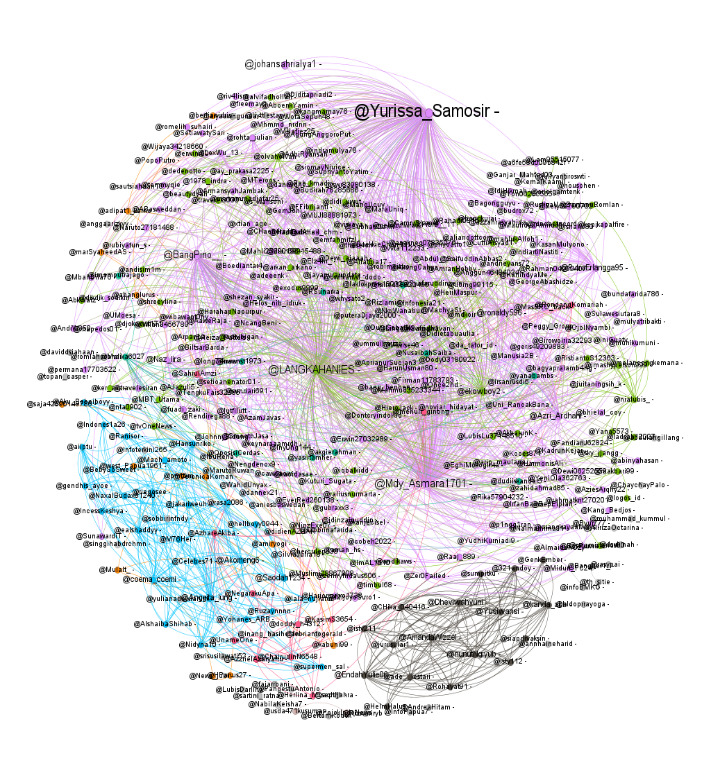
Overall, both visualizations corroborate the structural metrics presented above. The Papua Merdeka discourse evolved from a more siloed configuration in 2019 to a denser, more interconnected network in 2024, with increased cross-cluster engagement and the rise of bridging actors. However, the asymmetry in narrative influence persisted, with pro-independence discourse retaining a stronger transnational reach and emotional resonance.
Narrative Strategies in Twitter/X Discourse (2019 vs 2024)
The comparative analysis of high-engagement tweets from the 2019 and 2024 election cycles reveals significant shifts in both the thematic content and communicative strategies employed by pro-independence and pro-NKRI actors. Drawing on DHA and CDA the findings indicate evolving narrative tactics shaped by changing political contexts, platform affordances, and audience dynamics.
In 2019, pro-independence discourse was heavily anchored in the articulation of historical grievances and moral absolutes. Tweets frequently employed emotionally charged language, portraying Papua as a site of occupation and systemic violence—captured in phrases such as “Papua bukan merah putih, tapi merah darah” (“Papua is not red and white, but red with blood”). The lexical repertoire prominently featured terms like genocide, occupier, referendum, and colonialism, often accompanied by imagery depicting military operations or human rights violations. Representations of dispossession and oppression were pervasive, positioning the Papuan cause within a global narrative of anti-colonial resistance.
Conversely, pro-NKRI discourse in 2019 emphasized stability, national pride, and infrastructural development. Tweets showcased government-led projects, invoked slogans such as “NKRI Harga Mati” (“The Unitary State is Non-Negotiable”), and framed Papua as an integral part of Indonesia’s constitutional and territorial integrity. However, this narrative was predominantly informational rather than affective, lacking the emotional intensity and transnational appeal of its pro-independence counterpart.
By 2024, pro-independence messaging had become more transnationalized and strategically adaptive. Narratives increasingly situated Papua within broader global struggles, drawing parallels with conflicts in Palestine and Ukraine, and leveraging the human rights lexicon to appeal to international advocacy networks. The rise of youth activists, artists, and meme-based accounts introduced a more hybridized communicative style, combining political critique with visual satire, humor, and pop culture references to enhance virality.
Meanwhile, pro-NKRI actors exhibited moderate improvements in narrative sophistication. Infographics, statistical data, and curated video content became more common, signaling an attempt to harness digital affordances beyond plain text. Nonetheless, these efforts continued to focus on domestic audiences and were constrained by limited engagement with transnational discursive spaces. The emotional resonance and network amplification enjoyed by pro-independence narratives remained unmatched.
Overall, the diachronic comparison underscores a widening asymmetry in narrative agility. While pro-independence actors effectively adapted to the algorithmic and affective logics of Twitter, state-linked actors remained largely reactive and anchored to conventional top-down messaging strategies. This imbalance in narrative strategy contributes to the sustained dominance of pro-independence discourse in the digital public sphere during electoral cycles.
To illustrate how the Discourse-Historical Approach was operationalized in the analysis, Table X provides selected examples of binary-oppositional phrases taken from media reports, social media posts, and interview transcripts, together with their corresponding Hallidayan metafunction and DHA interpretation.
Interview Insights: Diverging Worldviews
The qualitative interviews with 23 key informants revealed a profound divergence in the interpretive frameworks through which the Papua question is understood. These perspectives not only humanize the digital discourse but also illuminate the underlying ideological, historical, and experiential factors that shape competing narratives. The analysis organizes these insights into three broad categories: pro-independence, neutral/mediating, and pro-NKRI positions.
From the pro-independence standpoint, key interviewees consistently framed Papua’s political status as the outcome of historical injustice and coercion, emphasizing a moral imperative for self-determination. Their discourse was characterized by absolute terms—“Papua is not part of Indonesia by will, but by force”—and anchored in collective memory of military violence, demographic marginalization, and unfulfilled international promises. Such framing resonates strongly with the moral-emotional appeals observed in the pro-independence digital narrative, reinforcing its alignment with global human rights discourses.
The neutral or mediating voices, exemplified by figures such as Jhon Norotouw, offered a more pragmatic diagnosis. While acknowledging Papua’s integration into Indonesia, they critiqued the state’s uneven implementation of Otonomi Khusus (Special Autonomy), citing governance failures, mismanagement of funds, and lack of genuine political dialogue. These actors advocated for sustained engagement, transparent governance, and inclusive decision-making processes as pathways to restoring trust. Their position bridges the polar extremes but remains underrepresented in the online sphere, where binary narratives tend to dominate.
From the pro-NKRI perspective, political and state actors, such as Prof. Yasonna Laoly and Police Commissioner General Boy Rafli Amar, emphasized sovereignty, constitutional integrity, and developmental progress. Several interviewees articulated this perspective through statements such as, “No country would give up its land. What we can offer is fairness and welfare,” which reflects a nation-state logic grounded in territorial inviolability. The emphasis on infrastructure development, welfare programs, and political stability closely paralleled patterns observed in the pro-NKRI digital narratives, although this messaging tended to generate lower affective resonance and a more limited network reach compared to pro-independence discourse.
Across these three perspectives, the interviews underscore the multi-layered nature of the Papua issue, where deeply embedded historical memories intersect with contemporary governance challenges and geopolitical considerations. Importantly, the offline testimonies reveal nuances often flattened in the algorithm-driven digital arena, highlighting the value of integrating qualitative field insights into the study of online political communication.
Discussion
Building on the empirical findings presented in the previous section, this discussion evaluates the broader theoretical implications of the study and situates the West Papua case within comparative debates on digital sovereignty and narrative contestation.
Comparative Synthesis
A cross-case comparison of West Papua with other separatist or autonomy-seeking movements in Asia such as Kashmir, Hong Kong, and the Rohingya crisis—reveals convergent and divergent patterns in the digital politics of contested sovereignty.
Three structural similarities emerge prominently. First, diaspora centrality is a consistent driver of narrative amplification across all cases. In West Papua, the digital momentum of hashtags such as #FreeWestPapua parallels #StandWithKashmir and #SaveRohingya in their reliance on diasporic actors to bridge local grievances with transnational audiences. This reliance on externalized voices reflects both the restrictions on domestic speech and the strategic targeting of international publics.
Second, the affective logic of visual storytelling is ubiquitous. In Hong Kong’s anti-extradition protests, livestreams and memes conveyed immediacy and emotional resonance, just as graphic imagery and victim testimonies in West Papua sought to elicit empathy and moral outrage. Such narrative devices transcend linguistic boundaries, enhancing global shareability and algorithmic visibility.
Third, issue framing within global human rights discourse is a shared feature. Movements in all cases anchor their legitimacy in international legal principles—self-determination, freedom from persecution, and opposition to militarization—while seeking alignment with other high-profile struggles (e.g., Palestine, Ukraine). This framing situates local conflicts within broader moral geographies, thereby attracting solidarity networks that operate beyond the nation-state.
Yet, the comparative analysis also highlights significant divergences rooted in regime type and state response. India’s approach in Kashmir—preemptive communication shutdowns—fundamentally restructured the online ecology, limiting both local voice and external verification. Myanmar’s treatment of the Rohingya combined disinformation campaigns with systematic erasure of digital traces. Indonesia’s response to West Papua has been more reactive than preemptive, characterized by episodic narrative countermeasures, selective throttling of Internet access, and a persistent underutilization of digital diplomacy in international forums.
These variations in state strategy directly influence the structure and intensity of online contestation. In West Papua, the persistence of high modularity and the prominence of hybrid actors—accounts that straddle state and activist narratives—suggest an environment where discursive boundaries are permeable but still polarized. By contrast, in environments with sustained and comprehensive censorship, such hybrid spaces are structurally improbable.
From a theoretical standpoint, this comparative synthesis underscores the need to conceptualize digital sovereignty not merely as control over infrastructure, but as the capacity to shape the moral and affective economies of online publics. In this respect, West Papua exemplifies a case where the state retains infrastructural sovereignty but remains at a relative disadvantage in the arena of affective, transnational narrative politics.
Overall, these findings position West Papua within a broader regional pattern of communicative asymmetry, where non-state actors often outperform state-linked narratives in terms of reach, emotional resonance, and global legitimacy, an imbalance with significant implications for electoral politics and long-term conflict resolution strategies.
The comparative insights from these findings illuminate a complex interplay between digital activism, state countermeasures, and the broader geopolitics of narrative power in contested territories. While the empirical analysis demonstrates clear patterns in the structure, content, and transnational reach of separatist and pro-state narratives, it also reveals the embeddedness of these dynamics within specific political, cultural, and technological contexts. West Papua’s case, marked by persistent communicative asymmetry despite infrastructural control, provides a fertile ground for interrogating how connective action operates under varying constraints, and how digital sovereignty is contested not only through control of platforms and infrastructure but through the moral economies of online publics.
These observations form the analytical bridge to the next section, where the discussion will integrate the empirical patterns identified here with the theoretical frameworks of connective action, digital sovereignty, and the DHA. By situating the West Papua case within broader scholarly debates and comparative cases, the discussion will extend beyond description to evaluate the implications for political communication theory, electoral mobilization, and the evolving logics of digital contention in Asia’s contested spaces.
The comparative insights from these findings illuminate a complex interplay between digital activism, state countermeasures, and the broader geopolitics of narrative power in contested territories. While the empirical analysis demonstrates clear patterns in the structure, content, and transnational reach of separatist and pro-state narratives, it also reveals the embeddedness of these dynamics within specific political, cultural, and technological contexts. West Papua’s case—marked by persistent communicative asymmetry despite infrastructural control provides a fertile ground for interrogating how connective action operates under varying constraints, and how digital sovereignty is contested not only through control of platforms and infrastructure but through the moral economies of online publics.
These observations form the analytical bridge to the next section, where the discussion will integrate the empirical patterns identified here with the theoretical frameworks of connective action, digital sovereignty, and the Discourse-Historical Approach. By situating the West Papua case within broader scholarly debates and comparative cases, the discussion will extend beyond description to evaluate the implications for political communication theory, electoral mobilization, and the evolving logics of digital contention in Asia’s contested spaces.
Digital Sovereignty and Platform Politics
The dynamics observed in the West Papua case also foreground the contested nature of digital sovereignty in platform-mediated political communication. As defined above, digital sovereignty refers not only to a state’s technical capacity to control information flows but also to its ability to shape the normative, discursive, and algorithmic infrastructures through which political narratives circulate. In the Indonesian context, this sovereignty is both asserted and challenged within the algorithmically governed spaces of Twitter/X, where state-aligned actors and separatist networks compete for visibility and legitimacy.
The findings indicate that, although the Indonesian state exercises substantial offline sovereignty through territorial control, legal instruments, and security operations, its digital sovereignty remains comparatively weak. This is reflected in the prominence of decentralized pro-independence networks, the visibility of diaspora-led messaging, and the limited ability of state-aligned accounts to shape or contain the circulation of alternative narratives on social media platforms. Pro-independence actors, often situated outside Indonesia’s jurisdiction, leverage platform affordances and global civil society networks to circumvent state messaging and insert Papua-related narratives into transnational attention economies. The prevalence of English-language hashtags, meme-based advocacy, and symbolic linkages to other global struggles exemplifies how separatist discourse can algorithmically outperform state-aligned messaging, even in the absence of material control over the physical territory.
By contrast, the state’s digital engagement strategy reflects a traditional, top-down communication model that is misaligned with the participatory, affective, and networked logic of contemporary platforms. As demonstrated in the DHA findings, pro-NKRI messaging relies heavily on institutional accounts and formal statements, which are less likely to benefit from algorithmic amplification compared to emotionally charged and visually rich content produced by decentralized activist networks. This structural disadvantage echoes similar patterns in the Rohingya crisis, where diaspora-led campaigns achieved greater international traction than state counter-narratives, despite Myanmar’s extensive control over domestic information infrastructures.
Theoretically, this case supports the argument that digital sovereignty must be understood as relational and multi-scalar. A state may hold sovereign authority over infrastructure (e.g., Internet service providers, regulatory frameworks) while simultaneously ceding narrative sovereignty within global platform ecologies. For hybrid regimes like Indonesia, the inability to algorithmically and discursively dominate digital spaces undermines the coherence of its sovereignty claims, especially when competing actors operate across jurisdictional and linguistic boundaries.
In practical terms, the West Papua case underscores the necessity for states to recalibrate their digital sovereignty strategies toward platform politics, engaging not only with content creation but also with the algorithmic logics, influencer ecosystems, and transnational advocacy networks that structure digital visibility. Without such recalibration, state narratives risk remaining peripheral in the very spaces where legitimacy and recognition are increasingly negotiated.
Narrative Politics and Algorithmic Amplification
The empirical patterns observed in this study reveal that narrative politics in the digital sphere are closely intertwined with the algorithmic architectures of social media platforms. Narrative politics refers to the strategic construction, circulation, and contestation of meaning to shape political perceptions and actions. In the West Papua case, both pro-independence and pro-NKRI actors engage in narrative politics; however, their respective capacities to achieve visibility and resonance are substantially shaped by the algorithmic amplification mechanisms that govern social media environments.
Algorithmic amplification operates as a multiplier for certain narrative forms—particularly those that are affectively charged, visually rich, and embedded in transnational frames. As evidenced in the 2024 dataset, pro-independence narratives strategically employed high-emotion language, compelling imagery, and symbolic linkages to global struggles (e.g., Palestine, Ukraine). These features align closely with the engagement-driven priorities of Twitter/X’s algorithm, enabling such narratives to circulate beyond their immediate network and penetrate broader publics.
By contrast, pro-NKRI narratives often relied on institutional discourse, development statistics, and formal political rhetoric. While these messages may hold persuasive power in traditional media contexts, they are less likely to trigger the engagement metrics (likes, shares, comments) that drive algorithmic recommendation systems. Consequently, the amplification gap between the two narrative blocs reflects not merely differences in content quality but also differences in platform literacy—the capacity to produce content that is structurally compatible with platform logics.
The West Papua findings resonate with observations from Kashmir, Hong Kong, and Rohingya activism, where decentralized activist networks demonstrated greater agility in adapting narrative strategies to the affordances of digital platforms (Albrecht et al., 2021; Ali, 2023; Nasir, 2020; Rajgarhia, 2020; Wang & Mayer, 2022). In these contexts, actors who combined emotional storytelling, meme culture, and real-time updates often achieved algorithmic visibility that surpassed what might be expected from their material or institutional resources.
This dynamic suggests that narrative politics in the digital age cannot be fully understood without incorporating platform-centered analysis—examining how algorithms, trending systems, and influencer amplification shape the life cycle of political narratives. The ability to “design for the algorithm” becomes a critical determinant of narrative success, particularly in contexts where state actors face legitimacy challenges or operate under communicative asymmetries.
For states such as Indonesia, the findings highlight differences in how various actors engage with digital platforms, particularly in relation to the forms of content that tend to receive algorithmic visibility. The analysis shows that decentralized activist networks often generate affective and visually engaging content that aligns more readily with platform logics, while state-aligned communication tends to rely on more formal and informational styles. These contrasts suggest structural asymmetries in how different actors participate in the digital public sphere, without implying any normative preference for one communication approach over another.
The CDA examples presented in Table 3 further reinforce this point by illustrating that the asymmetry is not only structural and algorithmic but also discursive. Pro-independence actors deploy strong delegitimization strategies, drawing on emotionally charged and morally absolute language (e.g. “genocide,” “occupation”) and invoking interdiscursive frames linked to global struggles, which enhance the affective resonance and transnational extensibility of their narratives. By contrast, pro-NKRI actors rely primarily on legitimation strategies centered on legality and development, articulated through more rational and informational registers. The combination of affective framing and interdiscursive borrowing helps pro-independence narratives to align with the algorithmic affordances of social media, thereby consolidating their visibility and narrative dominance in the digital public sphere.
Connective Action and the Transformation of Political Mobilization
The West Papua case underscores how connective action—as theorized by Bennett and Segerberg (2012)—is redefining the landscape of political mobilization in contested territories. Unlike traditional collective action, which relies on formal organizations, centralized leadership, and standardized messaging, connective action thrives on personalized content sharing, loose network coordination, and the integration of individual identities into broader political narratives.
The empirical findings from the 2019 and 2024 electoral periods demonstrate a marked shift toward connective action logics among pro-independence actors. The 2024 network, as revealed by SMNA, exhibited reduced modularity, increased cross-cluster interaction, and a denser web of user-to-user connections. This evolution suggests that mobilization is increasingly sustained not by centralized commands but by a distributed network of actors—diaspora communities, youth activists, meme creators—who co-produce and co-circulate narratives tailored to their social contexts.
Connective action in West Papua’s digital sphere is characterized by three key features: (1) Personalized Political Expression – Hashtags such as #FreeWestPapua were not merely slogans but adaptable identity markers. Users infused these frames with personal stories, localized grievances, and visual artifacts that made participation both accessible and emotionally engaging; (2) Hybrid Actor Networks – The emergence of hybrid accounts—bridging activist and state-linked narratives—reflects the blurring boundaries between traditional political actors and grassroots participants. While not dominant, these hybrids demonstrate the potential for cross-fertilization of discourses, even in polarized environments; (3) Algorithmic-Optimized Mobilization, the most effective connective action campaigns integrated platform literacy into their strategy, producing content designed for rapid algorithmic diffusion. This strategic adaptation magnified the reach of messages without requiring hierarchical coordination.
In contrast, pro-NKRI mobilization exhibited features closer to collective action: message uniformity, centralized coordination, and reliance on institutional authority. While such approaches ensured message discipline, they limited the capacity for viral spread and reduced resonance among digitally native publics. The persistence of this model reflects both institutional inertia and the state’s risk-averse posture in engaging with bottom-up digital activism.
The transformative aspect of West Papua’s digital mobilization lies in its ability to sustain momentum across electoral cycles, transcending the temporal boundaries of campaign seasons. This continuity mirrors patterns observed in Hong Kong’s post-2019 resistance networks and in the enduring Kashmir solidarity campaigns. In all cases, connective action enabled a degree of resilience against state-imposed disruptions—whether through Internet shutdowns, legal restrictions, or disinformation countermeasures—by diffusing agency across a broad base of participants.
The theoretical implication is clear: connective action is not merely a tactical adaptation to social media environments but a structural shift in how political mobilization is conceived and executed. For states confronting separatist movements in the digital age, recognizing and responding to this shift is imperative. This may require rethinking engagement strategies, moving toward participatory communication models, and embracing networked collaboration without ceding control over core political narratives.
Implications for Conflict Communication and State Strategy
The West Papua case offers broader lessons for conflict communication in the digital age, where the interplay between connective action, platform politics, and narrative contestation fundamentally reshapes the state–society communication interface.
First, the asymmetry in narrative power between pro-independence and pro-NKRI actors demonstrates that emotional resonance, participatory framing, and transnational amplification are decisive in shaping public perception. The findings indicate that while state-linked actors possess institutional authority, they remain disadvantaged in the algorithmic public sphere due to their reliance on top-down, risk-averse communication strategies.
Second, the comparative analysis with Kashmir, Hong Kong, and Rohingya underscores the centrality of digital sovereignty in contemporary conflict management. States that actively manage digital narrative space—such as India in the Kashmir context through preemptive communication controls, and Singapore or Malaysia through coordinated counter-narrative strategies—illustrate a shared recognition of digital platforms as contested geopolitical arenas. In contrast, Indonesia’s reactive stance in West Papua reflects a missed opportunity to shape the narrative ecology proactively, especially in moments of heightened global attention such as elections.
Third, in the context of conflicts such as those in Indonesia, India, and Hong Kong, effective communication in contested regions requires strengthening networked communication capacity. This involves not only improving digital infrastructure but also developing a deeper understanding of how different actors operate within connective action logics across various platforms. Strengthening this capacity entails integrating participatory storytelling that empowers local communities to co-create narratives aligning national unity with local dignity; enhancing algorithmic literacy among state communicators and allied influencers so they can produce content attuned to the dynamics of digital visibility; advancing digital diplomacy that engages West Papua diaspora groups and international networks to address imbalanced global framings; and adopting conflict-sensitive communication ethics that avoid heavy-handed measures and instead prioritize transparency, factual accuracy, and respectful dialogue.
Finally, the shift toward connective action in West Papua—and its persistence across electoral cycles—shows that both pro-independence and pro-NKRI actors rely on long-term, digitally mediated forms of engagement rather than episodic, event-driven communication. This pattern indicates that narrative dynamics in the conflict are best understood through continuous narrative stewardship on both sides, shaped by platform affordances and evolving audience practices, rather than through short bursts of campaign-specific messaging.
From a theoretical perspective, the West Papua case enriches the study of political communication by illustrating how connective action intersects with the politics of recognition, identity, and sovereignty in digitally mediated conflicts. From a policy standpoint, it signals that in the twenty-first-century information environment, narrative dominance is not simply a byproduct of political power—it is itself a critical form of political power, one that states must actively cultivate to prevent asymmetric erosion of legitimacy.
In sum, the findings and discussion presented here reveal that the struggle over West Papua is as much a battle of narratives as it is a political and territorial dispute. The interplay between connective action, platform governance, and affective amplification reshapes the conditions under which legitimacy is negotiated in the digital age. The implications extend beyond Indonesia, offering comparative insights for states grappling with separatist movements in an interconnected, algorithmically mediated world. The following conclusion synthesizes these insights, outlining the study’s contributions and potential avenues for future research.
Conclusion and Policy Implications
This study examined the evolving digital contestation surrounding West Papua during the 2019 and 2024 Indonesian elections, integrating SMNA, CDA, and qualitative interviews to produce a multi-layered understanding of the conflict’s communicative dynamics. By situating the case within the theoretical frameworks of connective action, digital sovereignty, and narrative politics, our research demonstrates how political mobilization in contested territories increasingly unfolds through personalized, networked, and algorithmically mediated communication.
Three overarching conclusions emerge. First, the shift from collective to connective action among pro-independence actors characterized by personalized storytelling, hybrid actor networks, and platform-optimized content enabled sustained mobilization across electoral cycles. This mode of engagement contrasted sharply with the more centralized and message-disciplined approach of pro-NKRI actors, whose communications struggled to match the affective and viral potency of their counterparts.
Second, the West Papua case illustrates the strategic salience of digital sovereignty in modern conflict management. Platform politics shaped by algorithmic visibility, influencer amplification, and transnational advocacy networks can significantly amplify or constrain political narratives. The absence of a proactive state-led strategy to navigate these dynamics left pro-NKRI narratives at a persistent disadvantage in the transnational digital sphere, particularly during moments of heightened visibility such as election periods.
Third, the comparative lens with Kashmir, Hong Kong, and the Rohingya crisis reinforces that the struggle for narrative dominance is not merely a derivative of political power but a core dimension of political power itself. In this regard, effective conflict communication requires states to move beyond episodic, event-driven messaging toward continuous narrative stewardship that integrates participatory storytelling, algorithmic literacy, transnational engagement, and ethical communication practices.
Theoretical contributions of this study lie in advancing the understanding of how connective action, digital sovereignty, and affective publics intersect in high-stakes political conflicts. By combining network analytics, discourse analysis, and in-depth interviews, we offer a methodological blueprint for examining similar cases in other contested territories.
Practical implications highlight the importance of understanding how different actors—state institutions, civil society groups, and pro-independence networks—navigate platform ecosystems. In the West Papua context, this includes examining how local communicators, diaspora communities, and national stakeholders each adapt their messaging to the affective, visual, and memetic logics of contemporary social media environments.
These findings also indicate that the dominance of pro-independence narratives stems not only from structural features of the network, but also from the use of emotionally charged and interdiscursively embedded discursive strategies that resonate more effectively within platform-driven communication environments.
Finally, this study opens pathways for future research in three directions: Longitudinal studies tracking the evolution of digital mobilization strategies in West Papua beyond electoral cycles.
In conclusion, the West Papua case underscores that in the twenty-first century, sovereignty disputes are as much about controlling narratives as they are about controlling territory. As digital platforms continue to mediate political legitimacy, both state and non-state actors must adapt to a reality where communicative power is decentralized, participatory, and globally networked.