
Mass media coverage plays a critical role in public discourse, functioning not merely as a distributor of information but also as a platform where social reality is constructed and meanings are negotiated (Happer & Philo, 2013; King et al., 2017; Pan & Kosicki, 1993). In communication studies, media coverage refers to the selection, processing, and presentation of information by media institutions. Media coverage has been believed to influence public opinion and understanding of events, issues, and actors (Bachmann et al., 2022; Mutz & Soss, 1997). In the context of Indonesia as one of the largest media consumers in the world (Elfisha, 2018; Sukmayadi, 2024), what the media emphasizes can have significant effects on public sentiment and government policies.
Mass organizations, referred to nationally as ormas, are frequently highlighted in Indonesian media coverage. Since the post-reform era, the presence of mass organizations has emerged as a manifestation of democracy, facilitating broader public participation in Indonesia (Alawiyah, 2013; Latief, 2016; Wardani, 2024; Wibowo & Harefa, 2015).
With a total of 554,692 organizations to date and a strong legal foundation through laws enacted by the government, ormas are defined as voluntary community organizations that aim to participate in development to achieve the goals of the Republic of Indonesia. In more practical terms, numerous scholars defined mass organizations or ormas as large groups with members that represent various societal sectors, frequently associated with political movements or governments, and sometimes functioning as extensions of government policies (Albareda, 2021; Kasza, 1993; Purwadi et al., 2018).
The discussion surrounding the role of mass organizations (ormas) in Indonesia is a notable and significant issue, particularly in the context of public discourse. This is predicated on the premise that such organizations are entities that frequently evoke diverse perceptions and dynamics of public opinion, due to their large presence and legally recognized status (Kumparan, 2025; Kurniawan, 2018; Mewangi et al., 2025).
The media occupies a central position as a source of information within these dynamics. The media not only reports on organizational activities but also actively constructs images and narratives of these organizations for a broad audience (Mujianto, 2018; Purba, 2025).
In theory, the construction process described above uses multiple techniques. The first technique is issue selection or agenda setting. The media has the ability to choose which features or events are crucial for the public to pay attention to (McCombs et al., 2014). The media can shape public perception regarding mass organizations by emphasizing specific issues. The second technique involves framing. At this stage, the media selects both the content to be reported and the manner of its presentation. The practice of framing involves the selection of specific aspects of reality, emphasizing these aspects within the news text, and presenting them within a particular narrative or perspective (D’Angelo, 2017). Such framing can establish contexts that guide audiences in the interpretation and comprehension of mass organizations. The final technique is the utilization of language (linguistic choices/discourse strategies). The formulation and reinforcement of specific narratives are influenced by linguistic choices, including diction, labels, metaphors, sentence structure, and sources quoted in the news text (Busa, 2014). In this context, language is not limited to its function as a medium for conveying information, but also as a variable for defining, assessing, and positioning organizations in public discourse.
While the media plays a pivotal role in influencing discourse and public perception regarding mass organizations, the narratives that emerge in news reports are significantly lacking when juxtaposed with the ideal representation of mass organizations as prescribed by the Indonesian law (e.g., Jati, 2025; Prabowo, 2025). In general, Indonesian mass organizations are often labeled in media coverage with the stigma of violence, thuggery, and intimidation due to the actions of certain members of mass organizations (e.g., Bagaskara, 2025; Noviansah, 2024). According to local news reports and government warnings, the stigma associated with these mass organizations has disturbed and fractured the order of community life (e.g., Akbar, 2025; Irwan, 2025). Moreover, news stories frequently highlight prejudices depicting particular mass organizations as exclusive and intolerant of divergent viewpoints (e.g., Dewantara, 2023; Ramadhan, 2020).
The stigma and stereotype are subsequently sustained by media portrayals that often emphasize mass organizations during their engagement in various contentious matters. Several concerns frequently emerge, including purportedly intolerant practices, such as the dismissal of religious symbols or beliefs of other communities (e.g., Dewantara, 2023) and acts of violence or illegal extortion (premanisme) (e.g., Bagaskara, 2025; Noviansah, 2024). Consequently, these issues have prompted public figures and the wider community to demand the dissolution of certain mass organizations (e.g., Ramadhan, 2020). The emphasis on negative incidents may reinforce public perceptions of mass organizations that are often viewed as problematic.
The connection between intense negative perceptions and journalistic reporting practices resembles a sharp cliff, with each aspect reinforcing the other. It is common for news production routines that emphasize controversial elements to rely primarily on opinions and claims, as illustrated in Indonesian media coverage (e.g., Jati, 2025; see also Robertson et al., 2023; Zhou & Moy, 2007).
Despite the strong presence of negative narratives surrounding mass organizations in public discourse, empirical evidence regarding these narratives and their representation in mainstream online media remains limited. This condition is consistent with our review of previous studies that investigated the presence and phenomenon of mass organizations in Indonesian society. The majority of research has tended to concentrate solely on the analysis of the role and function of mass organizations in terms of research topics (Brown, 2019; Herdiansah & Randi, 2016; Novianti, 2008; Rahman et al., 2023; Rusfiana & Kurniasih, 2024), law enforcement and regulation of ormas (Amer, 2020; Febriansyah, 2018; Helmi et al., 2024; Wasiska, 2025), case studies that dissect specific Islamic organizations (Afkar & Sundrijo, 2023; Brown, 2019; Medias et al., 2025; Muhammad, 2016) and some problematic issues such as conflict, radicalism, and other negative issues involving mass organizations (Armiwulan et al., 2021; Mujianto, 2018; Zada, 2002). Previous studies have also explored the political role of Indonesia’s largest religious organizations, suggesting that their close ties to the political sphere function not as a mere political vehicle, but rather as a significant political force driven by their massive followings (Haris & Dardum, 2021; Hidayatullah et al., 2022; Mahatma, 2017). Indeed, earlier studies have also analyzed the historical and political violence, as well as the evolving nature of vigilantism, associated with these groups (e.g., Bakker, 2016; Petrů, 2011). Moreover, we noticed a methodological trend in which the qualitative design appeared to be the predominant approach across these previous works, with most studies relying on interviews, thematic analyses, or qualitative case reviews to explore the community dynamics (e.g., Afkar & Sundrijo, 2023; Medias et al., 2025; Rahman et al., 2023; Rusfiana & Kurniasih, 2024).
The tendency to overlook mass organizations within media discourse and the predominant use of qualitative methodologies has created a research gap that requires further investigation. Previous studies appear to have overlooked the topic of mass organizations within media discourse. The mapping of news coverage pertaining to mass organizations remains unaccomplished. Negative sentiments regarding mass organizations have been extensively documented in prior research and media reports. From a methodological perspective, prior research on the representation of mass organizations has primarily employed a qualitative approach, focusing on the meaning and context of particular cases. This approach is typically restricted to generating generalizations or identifying large-scale trends. This has resulted in a lack of research employing quantitative methods. Quantitative approaches effectively map framing trends, sentiment distribution, and general patterns in public organization news in an empirical and systematic manner.
This paper aims to address this gap by offering new insights and research data, particularly quantitative data, regarding the portrayal and discussion of mass organizations in media discourse. We conducted a content analysis on the coverage of mass organizations in one of the most widely accessed online media platforms in Indonesia in order to introduce some novelty to the research. As previously stated, the objective of this research is to offer empirical evidence and a systematic mapping of the landscape of mass organization representation in the news in Indonesia. It is expected that the findings of this investigation will serve as academic validation for the diverse perspectives that have emerged regarding mass organizations in Indonesia.
Academically, this study should provide thorough empirical data on the way mass organizations are represented in the Indonesian media scene. Practically, this study has the potential to provide a more factual and empirical data-based picture of mass organizations to a wide range of stakeholders, including the general public, media practitioners, policymakers, and the organizations themselves. This is significant because it can foster a more objective, participatory, and informative public debate about the role and image of mass organizations. Hence, based on the above rationalization, we propose the following two main research questions:
RQ1. What is the distribution of news sentiment (positive, negative, and neutral) in the news regarding mass organizations in Indonesia?
RQ2. What are the main issues that serve as the media’s primary narrative discourse when covering mass organizations in Indonesia?
Methods
We employed content analysis to identify and categorize the data in order to answer the research questions. The term content analysis in this paper is defined as a systematic, replicable technique for compressing large amounts of text into categories based on explicit coding principles (Krippendorff, 2019). This methodology is frequently used in political communication, media studies, and the social sciences to identify hidden narratives and framing patterns. Additionally, content analysis is not solely concerned with the quantification of words; rather, it involves the interpretation of patterns of meaning within texts, images, and other forms of communication (Neuendorf, 2017).
In our study, we followed current best practices to conduct a thorough content analysis, and we adapted them to fit our topic of study (Hendriyani, 2017; Neuendorf, 2017; Rozado et al., 2022). We focus our analysis on media headlines to see the framing patterns toward mass organizations in Indonesia. The content analysis of headlines is a systematic assessment of news headlines that seeks out patterns, trends, or potential biases in news representation (Eriyanto, 2000). The analysis of headlines in this paper is conducted by calculating the frequency of specific phrases or themes and by analyzing the meaning and relevance of the language used.
This analysis is based on news publications by the one of largest online media in Indonesia (DetikNews) related to the social dynamics of mass organizations in Indonesia. The media company has made a name for itself as the most consumed online media, with more than 65% of Indonesians reading it daily (Pahlevi, 2022). DetikNews, as a subsidiary of the Detik Network under Trans Media, does not explicitly affiliate with any political ideology or party. We selected DetikNews because of its prominence and reach in Indonesian digital journalism, but we also acknowledge that findings may reflect its editorial tendencies and therefore should be interpreted with caution when generalizing to the broader media landscape.
In collecting the data, we applied boolean logic and used the keywords “ormas” OR “organisasi kemasyarakatan” (mass organizations) AND “Indonesia” to look for relevant and eligible news articles. Next, since we aimed to analyze the current discourse patterns in media headlines, we began with sources published within the last three years. For this reason, we limited the time frame to the period from January 1, 2022, to April 24, 2025. After applying the search term and filter to the news portal database, we were able to retrieve 5,000 relevant news articles.
For the initial stage of data analysis, we used Microsoft Excel. The program is used for its capacity to analyze the frequency and patterns of the aggregated data (Kalantari et al., 2017). The data collected in Microsoft Excel was then exported to a .csv file for further analysis.
The data analysis stage commenced with data cleaning to remove articles irrelevant to this research, determined by their publication year. Data in .csv format were filtered to include only news articles published from January 1, 2022, to April 24, 2025. In this cleaning phase, 458 articles were removed from the original total of 5,000. We did this manually to verify the publication time. The 458 articles were excluded because they were published outside the timeframe. The dataset utilized in this research was comprised of 4,542 news articles.
Headlines were classified as positive, neutral, or negative using a reproducible Excel-based workflow combined with manual validation, as described by Boukes et al. (2020). A positive tone conveys praise, approval, success, or other favorable outcomes, emphasizing the benefits or strengths of a person, brand, or event. A negative tone centers on criticism, failures, frustrations, or harmful consequences, often drawing attention to controversies or areas that require improvement. A neutral tone is fact-based and purely informative, avoiding strong emotional terms, praise, or criticism, and presenting information objectively. We used these definitions as our foundation in analyzing the sentiment.
Before the tone classification, we performed data stemming on all news headlines. This process aimed to remove all affixes contained in the headline narratives, leaving only the root words. This stage was conducted to minimize errors caused by excessive wordiness and potential semantic duplicates, which are likely to occur if the headline narratives contain many affixes.
First, we mapped headlines to specific mass organizations using an automated keyword-matching rule implemented in Excel (an IFS(SEARCH(name of ormas)) formula that assigns an organization name when a headline contains a matching token; headlines without a match were coded as “Ormas Saja” or only ormas
Next, we aggregated sentiment counts per organization using Excel COUNTIF and COUNTIFS functions. Sentiment labels were assigned through manual coding by the first and second authors using the multiple selection dropdown feature in Excel. To ensure reliability, our third author conducted an intercoder reliability measurement. We used the inter-rater measurement as formulated by Miles and Huberman (1994): reliability = number of agreements / (number of agreements + disagreements). They suggested that an IRR of 80% agreement between coders on 95% of the resulting codes is considered sufficient agreement to mitigate the interpretative bias (Miles & Huberman, 1994). In this study, the inter-rater reliability (IRR) for agreement on coded categories was 98%, indicating it is suitable for further analysis, as described in the following section. Once all analysis steps were complete, we created data visualizations aligned with the units of analysis that were the focus of this research. To generate the word cloud, we extracted the data from Excel sheets using standard Python 3.10 and the “wordcloud” library.
This study analyzed secondary, publicly accessible, and open-source publications; hence, the authors were not obligated to secure permission for data collection under Indonesia’s fair use provision, as stipulated in Law No. 28 of 2014 (Law of The Republic of Indonesia Number 28 of 2014 on Copyrights, 2014). However, the authors adhered to professional codes of practice, legal requirements, and data protection in accordance with the ethical guidelines established by the Indonesian Researchers Association (2024).).
Following data extraction, we established five analysis units for the samples as can be seen in Table 1.
The above content analysis units served as our framework for studying the media discourse on Indonesian mass organizations and their dynamics.
Findings
We analyzed 4,542 news headlines related to mass organizations (“Ormas”) published in the DetikNews between 2022 and 2025 based on the five elements of analysis mentioned above (Table 1).
Publication Frequency
Table 2 illustrates the quantity of news reports concerning mass organizations on the DetikNews.
Table 2 shows that the frequency of news about “Ormas” on the DetikNews channel increased for the first few years of the analysis period, reaching its peak in 2024, with 1,684 news articles. When compared to the overall data in the previous year, 2023, there was an increase of 22.79% which indicates that every year, the topic of “Ormas” remained highly prominent into early 2025. In fact, from 2022 to 2024, the related news increased by more than 80%.
The increase in news coverage of mass organizations in 2024 is not surprising. The reason for this is that 2024 was the peak of the contestation of the Republic of Indonesia’s presidential general election (Pilpres), and it is a common practice for the presidential election to intersect with various mass organization entities – in a variety of contexts and sentiments. However, the momentum of the presidential election contestation, which occurs every five years in Indonesia, was not the only reason for the surge in news regarding community organizations. On average, 2024 provided 421 news items about organizations every quarter, whereas in the first quarter of 2025, almost 600 pertinent news reports were identified. This number indicates that press coverage of community organizations will increase in 2025. Although our dataset cut-off was April 24, 2025, this trajectory indicates that press coverage of mass organizations was not declining after the election but continued to rise into 2025, reflecting their sustained salience in the post-election political landscape.
Keywords Analysis
We subsequently mapped the phrases and keywords present in the headline narrative and analyzed them to comprehend the context of the reported event or momentum. The analysis results of the most frequent keywords (excluding the search term “ormas”) are presented in Table 3.
As shown in Table 3, the term “polisi” (police) emerges as the most frequently occurring keyword in the analysis of news article headline narratives, second only to mass organizations or Ormas. The prevalence of the term police in the news coverage from 2022 to 2025 indicates that the police, both as individuals and as an institution, is a topic closely associated with mass organizations.
The keyword analysis revealed a significant presence of major Indonesian national political figures, including Jokowi, Prabowo, and Anies. Subsequent analysis revealed that the term Anies appeared most frequently among political figures, with 158 news headlines. This is followed by Jokowi at 145 headlines, and Prabowo at 133 headlines.
Additionally, several other significant phrases emerge with notable frequency, including “sidang isbat” (official session to determine the commencement of Ramadan), “kelola tambang” (rights to manage mining), “Muhammadiyah” (an Islamic organization), “Idul fitri” (Eid al Fitr), “ormas agama” (religious organizations), “jabar (West Java),” and “kemenag” (Ministry of Religious Affairs). The frequent appearance of the phrase “manage mining” in news headlines indicated that policy debates concerning the licensing of mining sector management were regularly reported by the DetikNews.
The keywords and key phrases represented the momentum and events emphasized by DetikNews. The headlines primarily highlighted the significant role of Ormas in the context of national social and political issues, as well as their network with Indonesia’s most prominent figures.
Sentiment Analysis
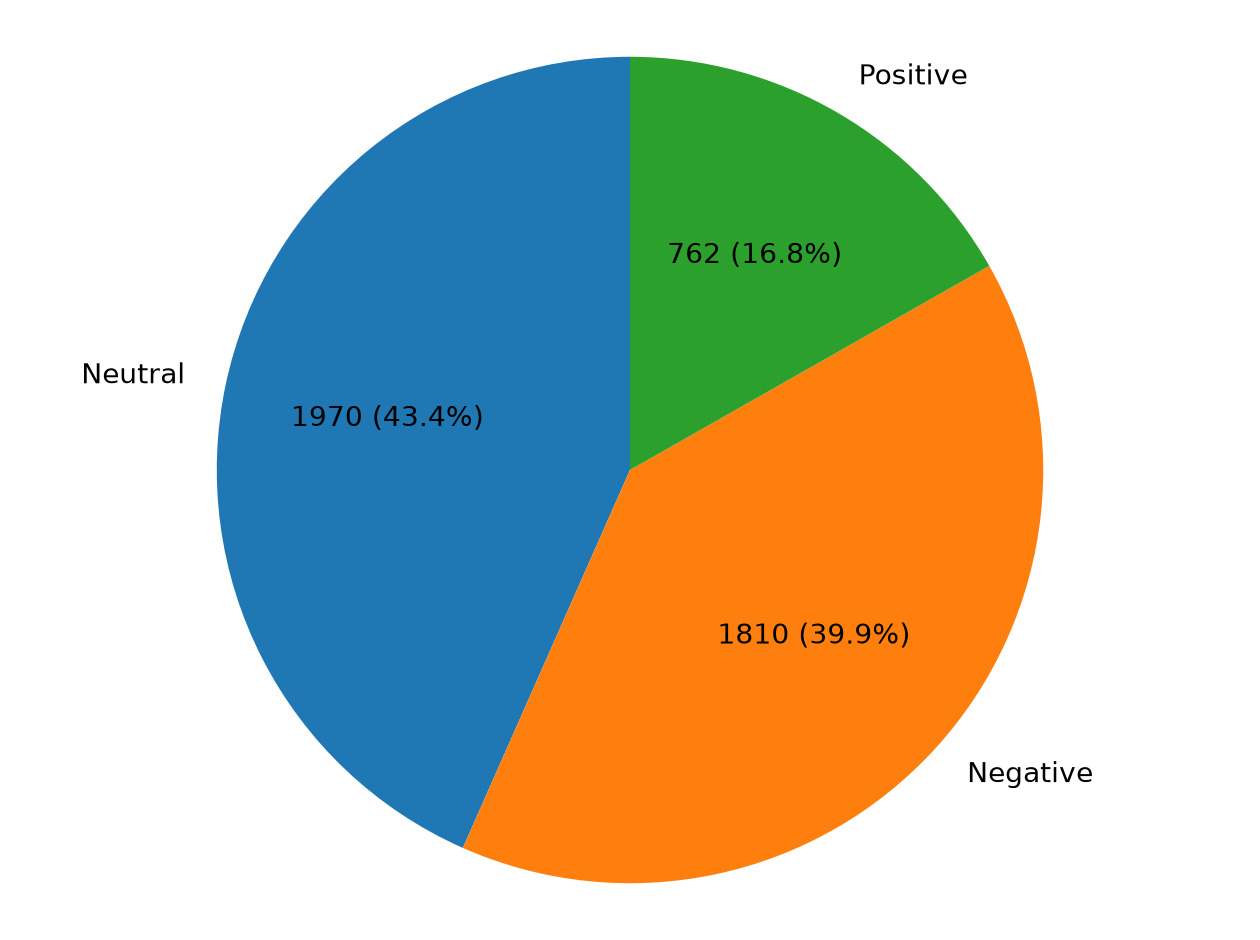
This section explores the sentiment of the news from a range of positive, neutral, and negative sentiments. The findings of the news sentiment analysis are illustrated in Figure 1.
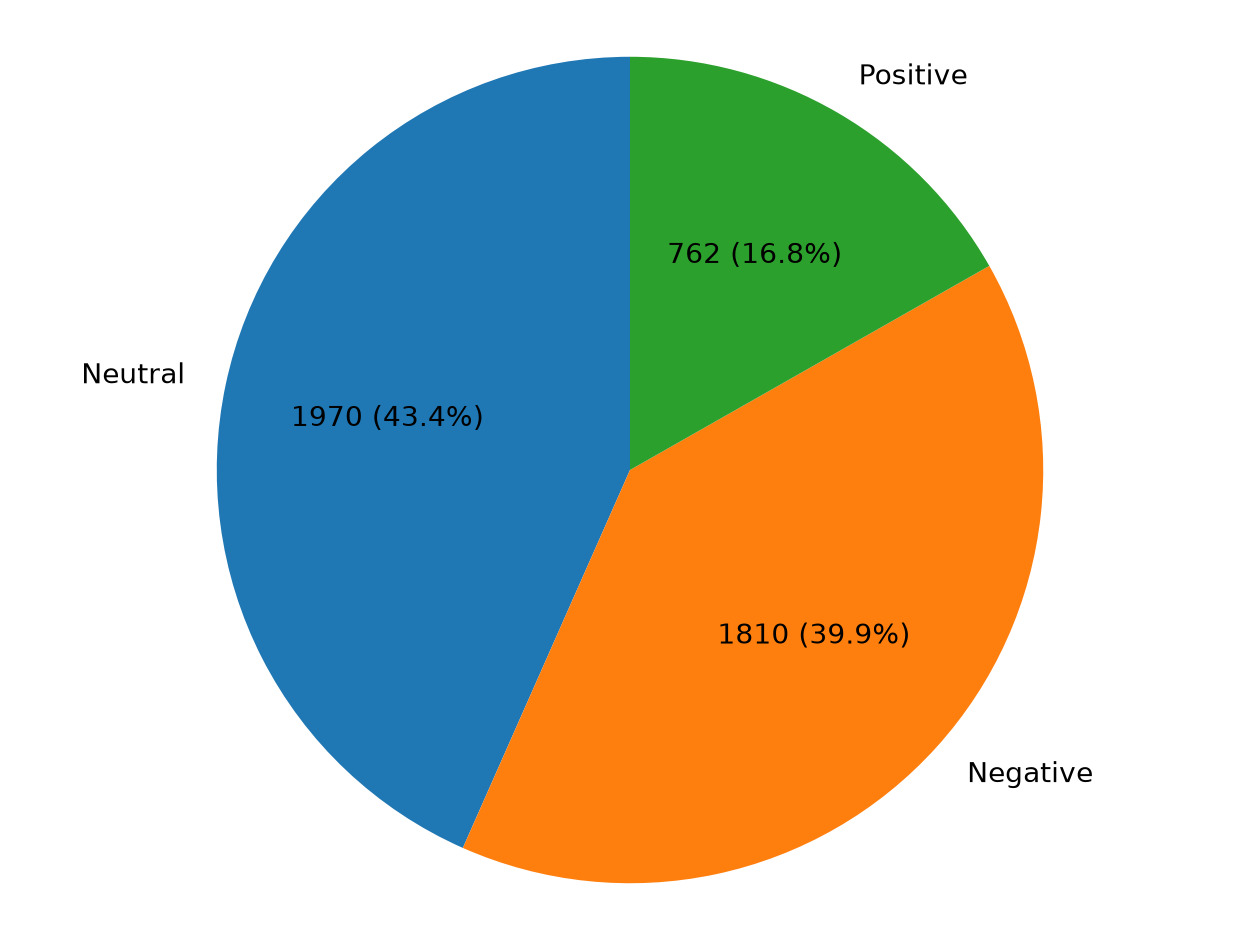
Analysis of the 4,542 news headlines compiled by the authors revealed that neutral (43.4%) and negative (39.9%) news sentiments were the predominant share for the period, while positive sentiment represented a lower proportion (16.8%). The neutral percentage, while the highest, had a narrow margin compared to the portion of negative news, with a difference of just 3.5 percentage points, equating to only 160 news articles. The findings of the analysis indicate a significant disparity with the positive news coverage, which only had 16.8%.
The slight disparity between the quantity of neutral and negative news reports leads to a conclusion that news reports associated with Indonesian mass organizations generally exhibit neutral to negative sentiments. While the findings of this analysis should not be solely relied upon to classify Indonesian Ormas as negative entities, they offer an empirical insight into the current portrayal of these organizations by the media and public sentiment.
Positive Sentiment
We identified four primary topics related to positive sentiment, which encompassed various issues that contributed to the context of the headline narrative. The first topic, political achievements and support, appeared in the headline narrative in a total of 293 news articles, making it the most frequent of the positive sentiment topics. The subject of political achievements and support encompasses various issues, including regional and national political campaigns, backing from community organizations for specific political figures, and collaborative movements between community organizations and political entities that led to political accomplishments.
The second topic identified from the sentiment analysis results pertained to harmonization and social activities. This was the topic of 242 news articles that addressed diverse issues pertaining to social and charitable activities associated with community organizations, fostering positive community acceptance. This topic frequently underscored social actions occurring within the regional context to bolster government programs and ensure regional viability.
A total of 164 news articles featured headlines addressing religious activities, including the anticipated commencement of the Holy Month of Ramadan, visits by religious leaders to Indonesia, and regional customs carried on for generations to celebrate religious holidays.
The subject of economy and public policy emerged as the fourth and final theme shaping the positive sentiment surrounding news about community organizations. Analysis of 63 news articles on economics and policy revealed key issues, including the role of community organizations in policy implementation related to economic matters, such as licensing in the mining sector, advocacy for conflict-free elections, and the handling illegal extorted fee cases in various regions of Indonesia.
Neutral Sentiment
We then proceeded to investigate the primary themes underlying headlines with neutral sentiments. The news headline narrative was established on the basis of four primary themes, which were identified as the most prominent in the neutral sentiment. The most frequent topic in the neutral sentiment category was policy regulation. A total of 828 news articles regarding policy regulations that pertained to mass organizations were identified. The theme included openness and responsibility of policy execution, policy review and evaluation initiatives, and law enforcement efforts.
A total of 519 news articles were found on a theme related to political statements and steps, which was in second place. This subject emphasized the manner in which political figures perceived and reacted to an event that pertained to community organizations. The theme of religious activities continued to appear in the neutral sentiment news analysis. Based on the 384 news items found, the main concerns revolved on the cause of religious festivities, including the outcomes of the isbat session deciding the start of Ramadan fasting and the end of Eid for Muslims. Additionally, there were 239 news articles that discussed event reports with neutral sentiments. The events discussed in this news were quite varied, ranging from the controversy surrounding the Draft Law (RUU) to the actions taken in various regions of Indonesia to defend Palestine.
Negative Sentiment
We identified five primary themes related to negative sentiment. The theme of criminal acts emerged as the predominant topic in the negative sentiment category, comprising 699 news articles, which represented nearly half of the total negative coverage of mass organizations. This theme held the second highest number of headlines across all sentiments, behind only the neutral “policy regulation” theme. The topic of criminal acts encompassed three primary issues: arson incidents, destruction of public facilities, and assaults leading to fatalities and injuries.
The next emerging theme identified in connection with negative news coverage was conflict and thuggery. The analysis of 501 news articles within this topic revealed that DetikNews coverage addressed issues such as violent conflicts, illegal territorial control, intimidation, and extortion. The authors’ analysis indicated that the topic of conflict and thuggery within mass organizations is frequently associated with various parties, including law enforcement officials, the private sector, and civil society.
In third place regarding negative news sentiment among community organizations, the topic of investment disruption and extortion was identified. A total of 403 news reports were identified as being related to this topic, with coverage primarily focused on issues of tension, disruption, and extortion within the business and investment sectors.
The public policy theme appeared in 199 negative sentiment articles. While a similar theme appear in positive sentiment news, the volume of negative sentiment headlines on this topic was greater. Negative sentiment public policy headlines pertained to expressions of dissatisfaction and disappointment following the execution of a policy.
The final theme identified in the headlines with negative sentiment was religious activities. The quantity was significantly lower than the preceding four topics—only 8 news articles—yet the issues within this category remain closely associated with public policy. Our examination of various news headlines revealed that public policies characterized by negative sentiments often emphasized rules concerning religious aspects, both objectively and subjectively. In order to simplify and summarize the findings, Table 4 provides a summary of the analysis of each sentiment in news coverage of Indonesian mass organizations. The analysis of news sentiment revealed that public policy and religious activities are consistently present across various news sentiments. It is important to note that neutral issues frequently appeared in negative sentiment headlines also. This pattern suggests a tendency for news to highlight the controversial aspects or criticisms related to the actions of mass organizations.
Mass Organizations’ Published Terms and Names
After analyzing the news sentiment generated by the news headline narrative, we also reviewed the terms and names of mass organizations published. Table 4 presents the names and terms of mass organizations based on their frequency of reference in DetikNews.
The data analysis presented in Table 4 indicate that, within the retrieved dataset compiled using our search parameters, the dominant term used to reference community organizations in headline narratives is the word ormas with a total of 3,660 mentions. In line with this finding, Table 4 indicated that the term Ormas Islam (Islamic Organizations) was referenced frequently, specifically 49 times, without associated details related to the subject matter reported. Although there is a significant disparity in the frequency of mentions between the term ormas and ormas Islam, the latter remains ranked fifth among the 16 categories identified in the search. This finding demonstrated that headline narratives regarding mass organizations in DetikNews are mostly implicit, as they do not explicitly reference the name of the organization being reported.
Nevertheless, these findings do not inherently lead to the conclusion that all headline narratives of mass organization news embody an implicit language style. In the second, third, and fourth rankings, we notice the explicit mention of various mass organization names, notably the religious mass organizations of Nahdlatul Ulama and Muhammadiyah, which received 401 and 106 mentions, respectively. Additionally, the Pancasila ideology movement mass organization, or Pemuda Pancasila, appeared in over 200 headline narratives. In other words, the frequent mention of specific mass organizations above suggests that these organizations are key players in shaping public sentiment and creating social shifts within the whole country.
Distribution of Sentiment on the Studied Mass Organizations
Additionally, the distribution of sentiment for each mass organization reported on is examined in Table 4. The general implicit manner of mention (only mentioning the term ormas) had a fairly balanced number of neutral and negative mentions. Reflecting the overall lower volume of positive headlines in the dataset, the number of positive mentions decreased proportionately, with only 578 out of a total of 3,660.
Table 4 indicates that the news headlines regarding the two largest religious organizations in Indonesia, Nahdlatul Ulama and Muhammadiyah, predominantly reflect a neutral sentiment. Despite both being classified as religious organizations, the sentiment in news coverage regarding Nahdlatul Ulama is predominantly neutral to negative. On the other hand, Muhammadiyah exhibits a secondary positive sentiment, suggesting that the sentiment distribution spans from neutral to positive.
We noticed that news coverage regarding the prominent ideological mass organization in Indonesia, Pemuda Pancasila, or the Pancasila youths, was predominantly characterized by negative sentiment. The analysis of these 99 headline narratives indicated that the organization was linked to a range of negatively-toned subjects reported in the media. The quantity of neutral sentiment findings in this category of organizations did not differ significantly; however, a substantial disparity was evident when compared with positive sentiment, which comprised only 27 news reports.
The results of this section indicated that news coverage of mass organizations in Indonesia continued to be neutral or negative. The distribution of sentiment was influenced by the use of implicit and explicit narrative headline styles, as the majority of news coverage captured by our keyword search tended to employ implicit narrative writing styles. Nevertheless, we did not find as much positive sentiment in the news coverage, whether implicit or explicit.
Discussion
This section presents two significant issues that emerged from the study’s findings. The first one is the tendency of sentiment in headlines to be neutral or negative and the associated issues arising from this tendency. This issue aligns with the study objective of exploring sentiment distribution in news coverage and identifying associated issues within that coverage.
The findings of this study indicate that the news coverage of mass organizations in Indonesia is characterized by neutral or negative sentiment. We discovered a substantial number of news stories that addressed topics such as violence, extortion, anarchism, and illegal extortion (premanisme), as well as criminality involving various mass organizations in Indonesia, despite the fact that not all mass organizations are implicated in these findings. It has been discovered that this condition is not a recent development.
While the involvement of ormas in public order disruptions and violent conflicts has been documented in earlier studies conducted outside our review period (Bakker, 2016; Petrů, 2011; Purwadi et al., 2018), this reflects that the negative perception of these organizations is not a recent phenomenon but has persisted over a long period. To build on this, our study addresses a distinct temporal and methodological gap by systematically analyzing contemporary online media framing and sentiment during the 2022–2025 period.
From the standpoint of the objectives of establishing mass organizations, the prevalence of negative media farming surrounding mass organizations, as demonstrated in this study, is regrettably far from ideal. In retrospect, the rapid expansion of mass organizations in Indonesia was exclusively a consequence of the collapse of the New Order regime (authoritarian era) in 1998 (Prasisko, 2016). The fall of the authoritarian regime reinstated freedom of expression and thought for the people, while simultaneously permitting the establishment of mass organizations (Fajri & Triyono, 2020). The number of mass organizations (ormas) in Indonesia has continued to increase since that time. They typically commence their activities voluntarily, motivated by a shared desire to contribute to the realization of national objectives while simultaneously serving as the voice of grassroots groups.
The legal framework that supports the existence of mass organizations after the New Order era is Perpu No. 2 of 2017, which is a revision of Law No. 17 of 2013 on mass organizations or ormas. However, the dynamics of ormas have shifted excessively, and they are even beginning to deviate from their intended course. The existence of this legal framework suggests that the government of Indonesia has indeed endorsed and supported the presence of ormas in Indonesia as a component of democratic practices. Nevertheless, the legal framework that supports ormas’ activities often allows the public to form associations and express their opinions with significant freedom. As an example, this is demonstrated by the emergence of a variety of religious mass organizations that instead advocate for intolerant and radical ideologies (Yilmaz et al., 2022).
Mass organizations should ideally embody civil society by articulating aspirations and grassroot ideas; nevertheless, they currently appear to function as coercive groups shielded by a legitimate legal framework. As demonstrated in the results under the negative themes of conflict and extortion, various mass organizations were frequently depicted in news headlines as implicated in confrontations, including extortion resulting in violence, involving both law enforcement officials and civil society. The same thing was also found in the research of Purwadi et al. (2018) who found a lot of involvement of ormas in illegal levies that occurred in various regions in Indonesia.
The recent shift of mass organizations’ functions is also evident in the increasing alignment of these associations with a limited number of political affiliations, which has resulted in an increasing political orientation of their activities. This was demonstrated in the research conducted by Goncing and Goncing (2022) who identified the political engagement of Indonesia’s largest religious mass organization (Nahdlatul Ulama) in part due to the significant number of its members participating in practical politics. According to Goncing and Goncing (2022), such partisan political involvement has drawn public scrutiny and mixed coverage regarding the organizations’ political neutrality.
However, as previously discussed in the literature review, the close ties between Indonesia’s largest religious organizations and the political sphere are best understood as a political force rather than a political vehicle (Haris & Dardum, 2021; Hidayatullah et al., 2022; Mahatma, 2017). The extensive mass coverage of religious ormas is not only a result of its long history, but also because it was founded on the religious values that the majority of Indonesians adhere to (Islam). This phenomenon is consistent with our study findings, which also indicated that news coverage of religious and political subjects frequently demonstrates neutral sentiment, as opposed to a sole emphasis on negative sentiment.
The substantial number of neutral stories suggests that the media perceived religious and political matters as sensitive topics that might quickly provoke public reactions, leading to their frequent presentation in a neutral format. The media perceived these two delicate matters as more accessible for public engagement and criticism. This situation can be conceptualized through Entman’s (2004) media framing theory which is highly relevant to the media’s role in defining and analyzing issues. One of our primary findings suggests that DetikNews headlines significantly emphasize criminality, conflict, and police involvement, which is consistent with this notion: headline lexical choices and topical emphasis operate as interpretive frames that make threat-related meanings more salient at first exposure (Chowdhury, 2025; Entman, 1993). This aligned with other studies that distinguished between episodic and thematic coverage, where episodic, event-driven reporting tends to encourage actor-focused attributions (Geise & Maubach, 2024; Horn, 2024). Headlines are potent framing devices that can prioritize episodic conflict frames over thematic, structural explanations, as they are compressed, attention-oriented texts, regardless of whether they are in their conventional or digital form, increasing the likelihood that readers encounter ormas primarily as sources of disorder rather than civic actors. It is therefore unsurprising that, in recent years (particularly during the 2024 election in Indonesia), a variety of religious and political issues became more significant in the media coverage of various mass organizations in Indonesia.
The agenda-setting dynamics, as coined by McCombs and Shaw (1972), are also reflected by the temporal aggregation of negative and conflict frames, particularly in the context of the 2024 Indonesian election cycle. The repetition and visibility in a high-traffic media outlet might increase issue salience and set the public agenda through making certain issues more cognitively available. As Bales (2004) added in his model of strategic media framing, when negative frames of public issues are both frequent and prominent during politically salient moments, the combined effect is to amplify particular problem definitions (threat, criminality, or violence) and to crowd out alternative civic or service-oriented representations. This pattern echoes prior research showing that political moments intensify conflict framing and that prominence amplifies agenda effects (Purwadi et al., 2018; Sanusi & Muhaemin, 2019; Vultee, 2022).
The headline-level patterns identified in DetikNews can be interpreted through established work on framing and agenda-setting. Framing scholarship emphasizes that media do not merely report facts but select and emphasize particular aspects of reality, thereby shaping how audiences interpret issues and establishing an conventional image of Indonesian mass organizations.
Limitations and Recommendations
We acknowledge that this study has several potential limitations. First, even though we analyzed thousands of headlines, a dataset based on a single media platform and only focused on the headlines may not fully represent the diversity of coverage from other media outlets, considering that Indonesia is one of the countries with the largest number of media outlets. Despite these limitations, headline analysis offers important insights because headlines are a primary mechanism for agenda setting and initial framing in online news consumption (Neuman et al., 2014). By documenting consistent patterns of neutral, positive, and negative headlines in a leading national outlet during the 2024 election and its immediate post-election aftermath, a politically salient period that extended into early 2025, this study provides an empirical starting point for broader comparative and reception research.
Given the quantitative characteristics of media content analysis, which emphasize mapping, frequency, and theme emergence, we might have overlooked the underlying social settings and complexities of narrative composition within the article.
Hence, we also suggest that a number of further initiatives be implemented to facilitate further studies. Initially, future studies may incorporate data sources from a variety of media outlets, including community media and non-mainstream media. Such an approach can definitely offer an intriguing viewpoint on social concerns. Secondly, the inclusion of a variety of platforms and languages in the dataset may facilitate generalization and reveal cultural or editorial variations that would not be apparent in research that exclusively analyzes a single source. Finally, future research can enhance the quantitative findings of this study by conducting qualitative case studies, such as those on organizations with more positive sentiment, and by investigating the reasons for their success despite the social stigma in society.
Conclusion
This study was conducted by reviewing headlines concerning mass organizations (ormas) in Indonesia, published by the largest online media channel in Indonesia (DetikNews), from 2022 to early 2025. This analysis, which analyzed 4,542 news headlines, indicated that more relevant headlines appeared in 2024 than other years, closely linked to the momentum of the ongoing presidential election in Indonesia.
This study also highlighted that the direction of news coverage of mass organizations in Indonesia ranges from neutral to negative sentiment. In this context, there is a significant amount of news coverage about events with anarchist and coercive undertones that often involve certain individuals from mass organizations. The perception of the roles of Indonesian mass organizations has shifted and is reinforced by media framing. Rather than serving as advocates for the people’s interests, they are now perceived as a group of “thugs” who pose a threat to public order.
In essence, this study found that religion, politics, and public policy are the three issues most commonly associated with ormas and most often covered by the media. The emergence of two religious mass groups with sizable followings has helped the widespread dissemination of religious topics. These three issues frequently overlap rather than stand alone. Furthermore, of the few positive-toned news pieces uncovered, the majority are about Indonesian mass organizations’ involvement in various political activities. This phenomenon reinforces the notion that Indonesian ormas play an important role in how the Indonesian government runs and how they influence the country’s political realm.